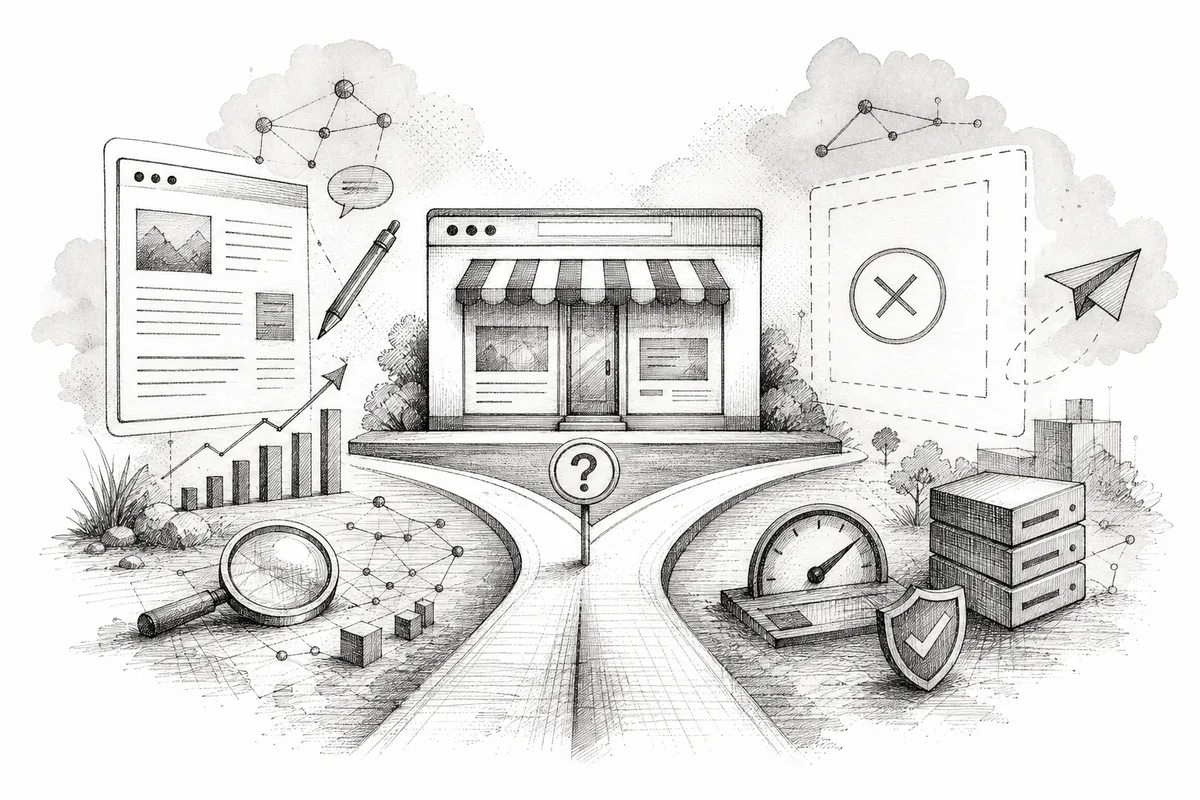
The short answer
A small business website does not automatically need a blog. It is worth having only when it has a clear job: answering repeated customer questions, targeting informational searches that do not belong on service pages, building trust, or supporting ongoing content work. If none of those jobs exists, the site is usually better off with stronger service pages, FAQs, case studies, location pages and a clear contact route.
When a blog helps
For local service businesses, service pages usually do the heavy lifting. They should be built for enquiries, with one clear service, one clear offer and a straight path to contact.
A blog is useful for topics that are helpful but not central enough for a main service page: common misconceptions, maintenance questions, seasonal issues and straightforward how-to explanations. Think of queries such as “How much does a boiler service cost?”, “Why does the drain keep blocking?” or “What should a homeowner do after a roof leak?” These are the kind of questions people search while they are deciding who to trust.
A blog also makes sense when the business has a real need to keep information current. That might be changing regulations, recurring customer questions or advice that becomes outdated if nobody revisits it. If content support is part of the plan, ongoing website management helps keep useful posts accurate instead of letting them drift.
When it does not
A blog is usually the wrong answer when there is no realistic process for updating it, or when the site already covers the important questions through service pages and FAQs. A neglected blog with two thin posts from years ago can make a site look unfinished or unmanaged.
It is also the wrong place for core conversion content. If the topic is really a service, a price guide, a location page or a contact page, putting it on a blog post can split search demand and weaken the page that should bring enquiries. In that case, stronger service pages and a better site structure are the better fix.
A practical test
Before adding a blog, ask three questions:
- What specific question will this post answer that no service page should carry?
- Will the answer genuinely help someone move from research to enquiry?
- Is there someone who can publish and update it often enough to keep it accurate?
If there is no clear answer to most of those questions, the blog is probably not earning its keep.
Two similar businesses, different answers
Example: a heating engineer who regularly gets the same questions about boiler pressure, servicing intervals and winter breakdowns can use occasional posts to capture those searches and reduce repetitive calls. The posts support the service pages instead of replacing them.
Example: a decorator offering a fairly stable list of services, with most enquiries coming from recommendations and direct service pages, may not gain much from a blog at all. If the questions are few and the services rarely change, a strong home page, clear service pages and FAQs will do more useful work.
The decision is not blog or no blog in the abstract. It is whether there is a real question to answer, a searcher to attract and a process to maintain the page after it is published. If those three things are missing, skip the blog and improve the pages that already sell the work.