The short answer
Website enquiry automation is worth adding when it removes repetitive, low-risk admin. Keep anything that needs judgement, reassurance or exception handling manual.
For many small business sites, a reliable contact form and a quick human reply are still enough, especially if enquiries are few and straightforward. Automation is not the goal on its own. The point is to stop good enquiries being missed, delayed or routed to the wrong place.
In practice, that can mean an acknowledgement email, an internal alert, lead tagging, service-specific routing, calendar booking, file upload confirmation, or a reminder if nobody has replied. Those are useful when the same messages keep arriving, when enquiries need sorting, or when response time is slipping.
When automation is a sensible fit
A good fit is a business that gets predictable enquiry types and can handle the first step the same way each time.
For example, a trades website might receive urgent call-outs, standard quote requests and routine booking enquiries. A form can flag the urgent jobs, send the message to the right inbox, and tell the customer the enquiry has been received. That saves admin and reduces the risk of a missed lead.
Other sensible uses include:
- routing enquiries by service, job type or location;
- sending an instant acknowledgement so the customer knows the form worked;
- alerting the team when an enquiry needs a quick response;
- sending a booking confirmation when the next step is already fixed;
- reminding staff when an enquiry has gone unanswered.
These are all repetitive steps. They are easy to verify and they do not need a human to write a fresh response every time.
When to keep it simple
Automation should stay out of the way when the first reply depends on judgement, context or tone.
A bespoke quote request is the clearest example. If the form needs a long chain of questions, attachments and exceptions before anyone can answer properly, a heavy workflow can make the enquiry harder to send and easier to break. In that case, a simpler form and a prompt human reply usually work better.
A professional practice, a high-value service or a complaint also needs care. A rule-based sequence can misroute the enquiry, answer too early, or sound dismissive. Speed matters, but not more than a response that feels considered.
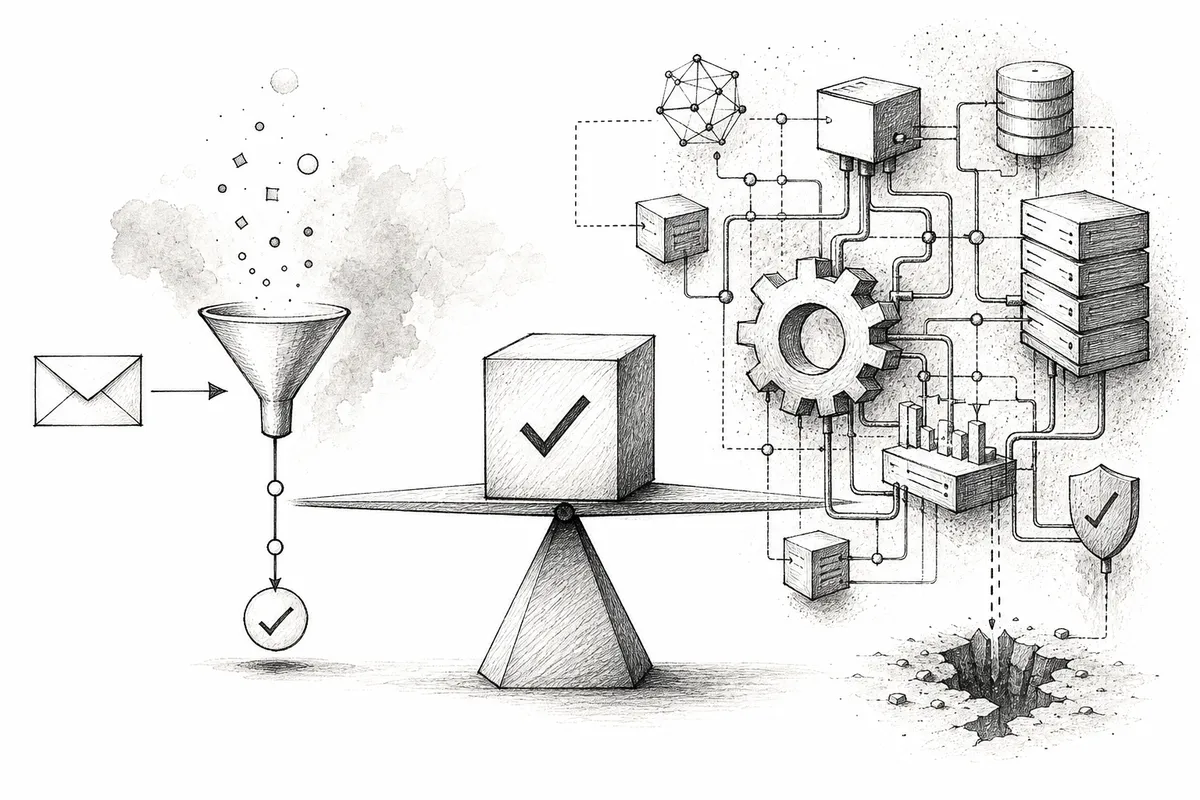
That is the real boundary: automate the parts that can be standardised without harming trust, and keep the parts that need discretion with a person.
The safest first steps
If website enquiry automation is a fit, start in this order:
- Make the form show a clear success message.
- Send an automatic acknowledgement to the customer.
- Send an internal notification to the right inbox or person.
- Add simple routing by service, job type or location.
- Add reminders only after the basics are reliable.
That order matters. If the form itself is unreliable, if emails sometimes fail to arrive, or if spam protection blocks real enquiries, more automation only creates more failure points.
Enquiry-flow work often belongs inside ongoing website management, not as a one-off add-on. If the site needs broader build, fix or development support as well, the services page covers that.
When a simple form is the better choice
Keep the setup simple if the business only receives a few straightforward enquiries each month, if every enquiry needs a proper conversation, or if the website mainly exists to make contact easy rather than to run a process.
In that case, the best improvement is usually not more automation. It is a reliable form, sensible spam protection, good email deliverability and a fast manual response.
If the enquiry process is unclear, map the steps after submission before deciding what is worth automating and what is better left alone.