The short answer
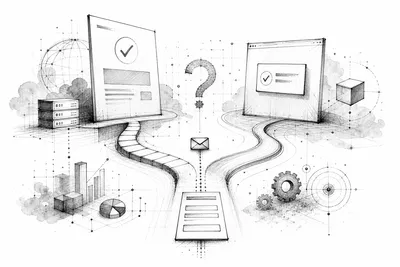
Use online booking when the customer can choose a time and the service is standard enough to be scheduled without a conversation. Use a contact form when the job needs qualification, a quote, photos or a bit of back-and-forth first. Use both only when different visitors genuinely need different paths.
When online booking is the better fit
Booking works best when the website is selling a repeatable appointment, not a piece of custom work.
A barber, nail salon, therapist or consultant can usually let people book directly because the service is defined, the duration is predictable and the customer already knows what they want. In that case, booking removes calls, cuts down email back-and-forth and lets the business fill slots more efficiently.
That is the point where an online booking system earns its place. The customer gets a clear next step. The business gets fewer messages to chase.
Booking becomes awkward when every request still needs manual checking. If staff have to confirm scope, send a quote, ask for photos or check access before honouring the booking, the system adds admin instead of removing it.
When a contact form is the safer choice
A contact form is usually the better default when the job is quote-led or depends on details the website cannot know yet.
A builder, roofer or bespoke joiner often needs the location, measurements, photos, materials, access or a rough budget before anyone can say yes to a visit. For that kind of work, forcing immediate booking can create bad appointments, wasted time and awkward cancellations.
A form lets the business ask for the right information first. It also filters out enquiries that are not ready to proceed.
That does not mean the form should be long. It should ask only for what is needed to judge the job: name, contact details, service type, location and any details that affect price or availability. If the form itself is clumsy, that is a separate problem; why your website contact form might be losing enquiries covers the usual failure points.
When both make sense
Some businesses need both paths, but only if the split is real.
A builder might not book extensions online, but could offer a bookable slot for a small maintenance visit or inspection. A clinic might take direct bookings for standard appointments and use a form for longer or more complex work. The key is that each path serves a different job.
Keep the choice obvious. Label one path as "book an appointment" and the other as "request a quote" or "send an enquiry". Do not hide the main action behind a generic contact page and do not ask visitors to guess which route applies.
If the site has two actions on one page, one should still be the primary one. Mixed-intent pages work when the difference is clear; they fail when both buttons look equally important and the user has to work out the process themselves.
A simple rule that avoids overengineering
If a stranger can choose a slot without needing a conversation, booking is usually right.
If the work cannot be accepted until someone checks the details, a contact form is usually right.
If both are true for different services, offer both and keep them separate.
That is the cleanest way to decide on online booking vs contact form without copying competitors or adding tools the business does not need. If the enquiry path is part of a new site or a redesign, website design and development services is where that decision usually gets built into the structure. If the split is still unclear, contact us and describe the work the business actually sells.