What a thank-you page does that a success message does not
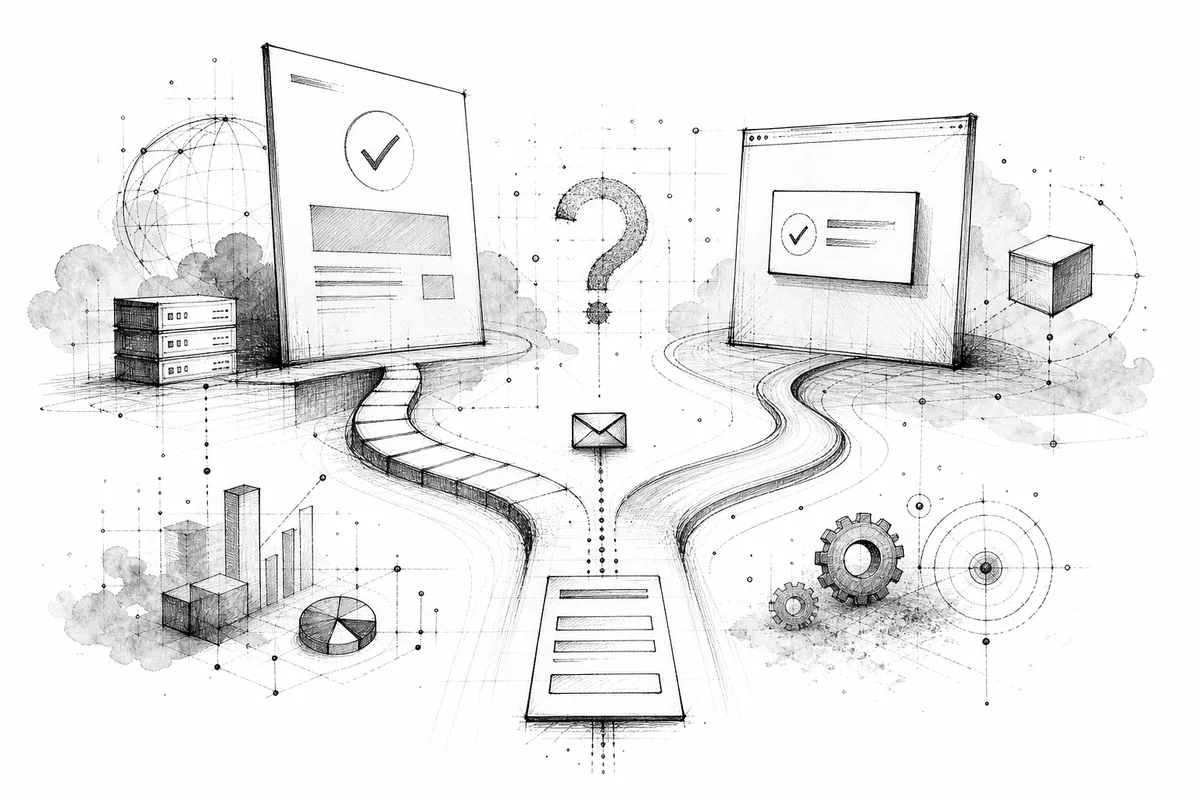
A normal on-page success message confirms the form was sent on the same page. A dedicated thank-you page gives that confirmation its own URL. That matters when the submission needs to be counted in analytics, ad platforms or a CRM, or when the page needs to send the visitor to the next step. It also reduces doubt, which can stop duplicate submissions.
If nothing is being measured, the extra page can be unnecessary. A simple message can still tell the visitor the form worked and what happens next.
When the dedicated page is worth it
Use a thank-you page for website form submissions when:
- enquiries come from Google Ads or Meta ads and the submission is the conversion
- enquiry measurement matters in GA4 or another tracking setup
- the form is part of a call-back, quote or booking process
- the visitor needs a clear next step, such as phoning, uploading photos or booking a slot
Example: a builder running paid ads to a quote form benefits from a dedicated page because the submission can be tracked as a clean conversion, and the page can show the phone number and response time.
Example: a small local practice with occasional general enquiries and no ads may only need a short confirmation message on the form page.
That choice is part of ongoing website management, because enquiry flow and tracking tend to need checking after launch.
When it is probably overkill
If the site is a simple brochure site, has one contact form, and no paid ads, CRM hand-off or conversion tracking, a separate page usually adds little. It is more pages to maintain, and it can create tracking work that does not change the number or quality of enquiries.
If form failures are already a concern, the bigger issue may be the form itself rather than the confirmation screen. In that case, it is worth checking why your website contact form might be losing enquiries.
What a useful thank-you page should contain
Keep it short:
- Confirm the form was sent successfully.
- Say when a reply is likely.
- Give an alternative contact method, usually a phone number or email.
- Add one useful next step only if it fits the enquiry, such as a booking link or the most relevant service page.
Do not use the page as a sales pitch. Its job is to remove doubt and make the next action obvious.
If the site already sends people into an external booking system or CRM confirmation flow, the right answer may be a different setup entirely. For sites that need that kind of decision, whether online booking is better than a contact form is a useful adjacent question.
A dedicated thank-you page is worth having when the submission needs to be measured or followed up. If it does not, keep the confirmation on the page and move on.
Need a dedicated page or better form tracking? Get in touch.