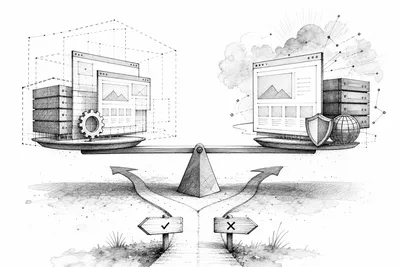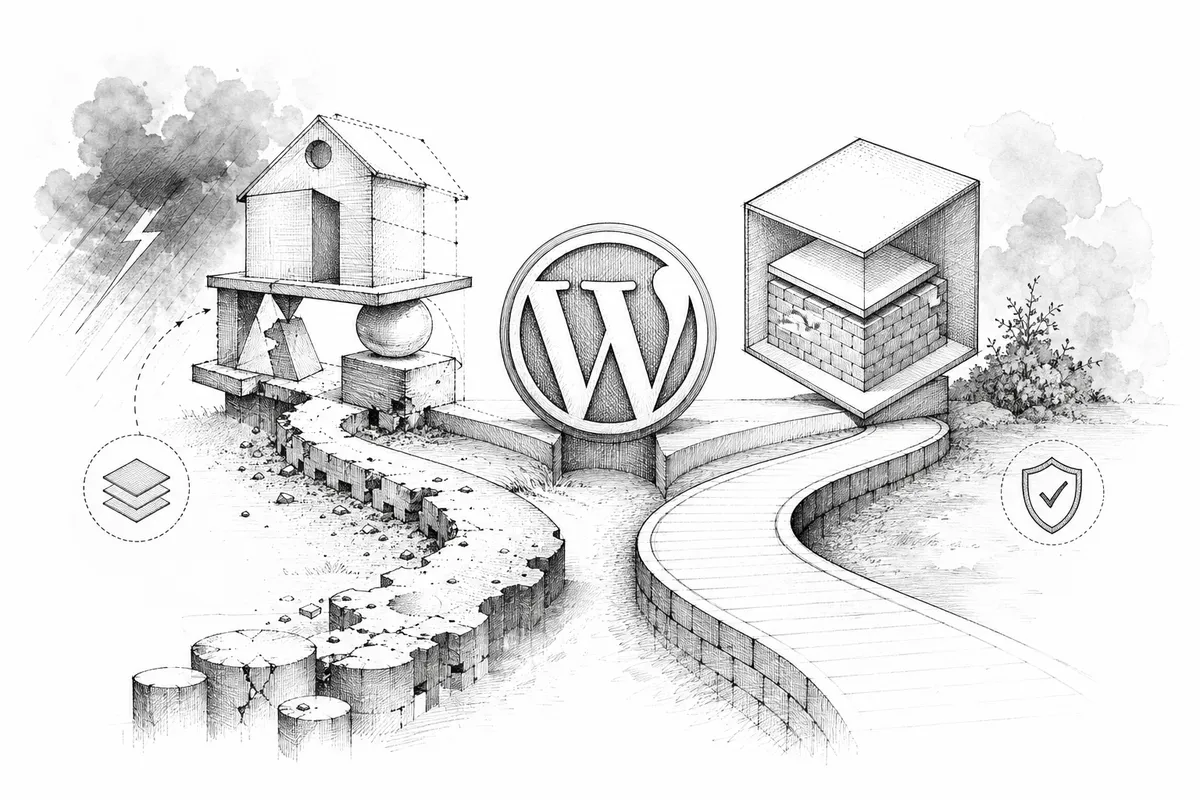
A child theme is only worth using when a WordPress change depends on theme files that would otherwise be overwritten by updates. If the job can be done with theme settings, block patterns, reusable blocks, custom CSS or a small plugin, a child theme is often unnecessary and can make a simple small business site harder to maintain.
What a child theme actually does
A child theme sits on top of a parent theme. It lets selected theme files be overridden while the parent theme still updates. That matters when the change is structural, not just visual.
The real decision is not whether a child theme sounds professional. It is whether the site needs file-level changes at all.
When a child theme is the right tool
A child theme usually makes sense when the change depends on template files or recurring custom code, for example:
- a different page structure for certain services or locations;
- a WooCommerce template override;
- a custom function that would be awkward or unsafe to keep in a plugin;
- repeated layout changes that cannot be handled cleanly in the editor or theme settings.
For example, a builder’s site may need a service page template with a different enquiry section, trust signals and call to action on every service page. That is a template decision, not a colour change, so a child theme can be the sensible way to keep the layout after parent theme updates.
When it is probably not needed
A child theme is usually overkill for changes like these:
- colours, fonts and spacing;
- small layout tweaks;
- short text edits;
- header or footer changes when the theme already has controls;
- reusable patterns, blocks or templates in a block theme;
- simple CSS adjustments.
For example, if a local practice only wants the button colour changed, the footer text updated and an extra FAQ block added, those are configuration-level changes. They can usually be handled in the editor, theme settings or custom CSS without adding another theme layer.
That difference matters because a child theme adds another thing to think about later. For a small business site that needs to stay easy to update, hand over and maintain, extra layers are only worth it when they solve a real structural problem.
The simplest safe choice
If the change can be made without editing template files, start with the simpler option. Use the block editor, theme controls or CSS first. If the site needs a recurring structural change that would be clumsy to rebuild every time, then a child theme is the better fit.
If the site is already built around a modern block theme with good built-in controls, a child theme may add complexity without real benefit. In that case, the safer choice is often to leave the theme alone and make the change through the tools it already provides.
If the site already has custom template work, ongoing website management becomes part of the decision because updates need checking. The risks are similar to the ones covered in why WordPress sites keep breaking after updates. When the change is bigger than a tidy theme edit, website support and development is usually the safer starting point.